At MIC we believe our students should be exposed to as many artistic performances as possible. Our Visiting Artists program is designed to host performing arts practitioners at least once each term. We reach out to South East Queensland’s leading artists who bring a variety of performing arts experiences to our students within the school day at no additional cost. The program is aimed at our Primary College students who really immerse themselves into the opportunity and find inspiration to spark their imagination.

Paper, Scissors – Rock! by Linsey Pollak

Local musician Linsey Pollak makes music by live-looping self-invented instruments such as a paper clarinet, a drinking straw oboe, a Cylisax and a rubber glove bagpipe. He demystifies the process of musical instrument design and music itself, at the same time creating beautiful music. This year Linsey’s performance, Paper, Scissors – Rock!, was attended by all Primary College students.
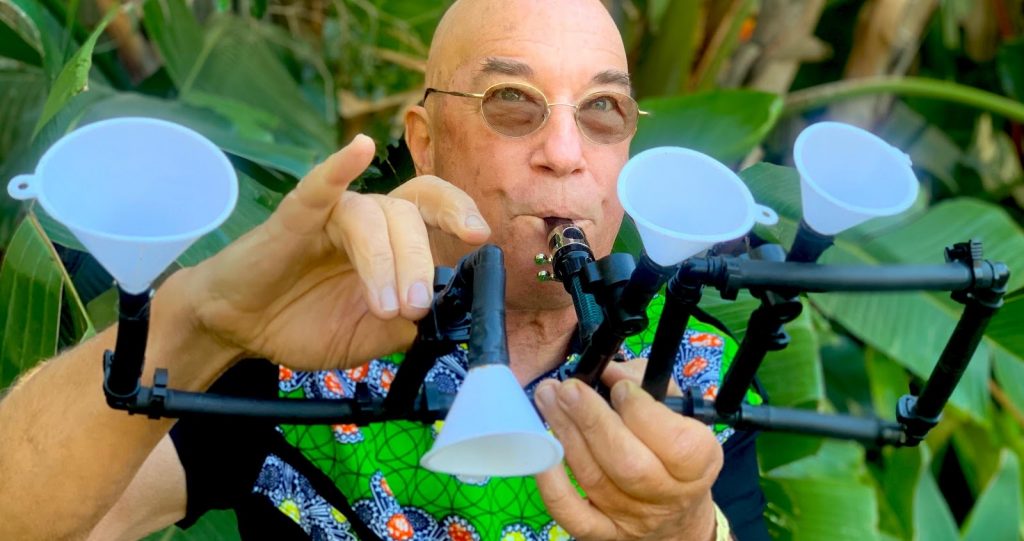
Linsey Pollak
Linsey Pollak creates music that has audiences dancing in their seats.

Commedia d’ell Arte

Commedia d’ell Arte is a traditional theatrical style performance using 16th century Italian masks. The masks release inhibition, providing a wonderful opportunity for the actors to energetically perform a combination of slapstick comedy and audience interaction. In 2020, Tony Kishawi will run a series of workshops with Sunshine Coast actors and staff and students from MIC. The workshops will run over two weekends culminating in a final performance for Primary College students as part of the MIC Creative Arts program and providing an opportunity for students to see their peers and staff members giving it a go on stage.
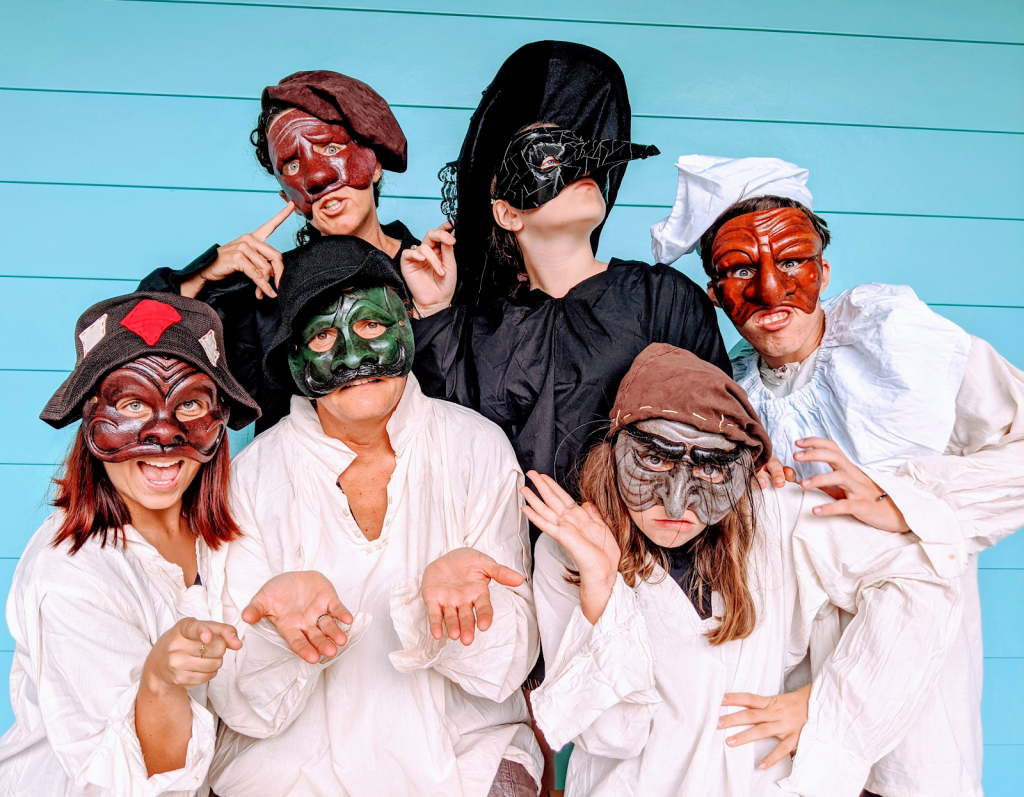
Commedia d'ell Arte
Commedia d’ell Arte realises the potential of talented performers already within the MIC community.

Lots in Space

A unique theatrical experience for children inspired by our childhood wonder of the universe. Space Nerd Seb, 7, investigates what you really need to be an astronaut and answers one of the greatest unanswered questions of the universe: What DO astronauts really have in their packed lunch boxes? Delivered by Sunshine Coast Live Theatre company 3bCREATIVE.

Lots in Space

An Adventure at Grannies

An Adventure at Grannies: Classics for Children is fun fables with mad music. Children laugh out loud and boo at the baddies as their favourite books come to life with a narrator and orchestral instruments. Light-hearted, rip-roaring performances of Little Red Riding Hood, Old Macdonald and The Three Little Pigs.
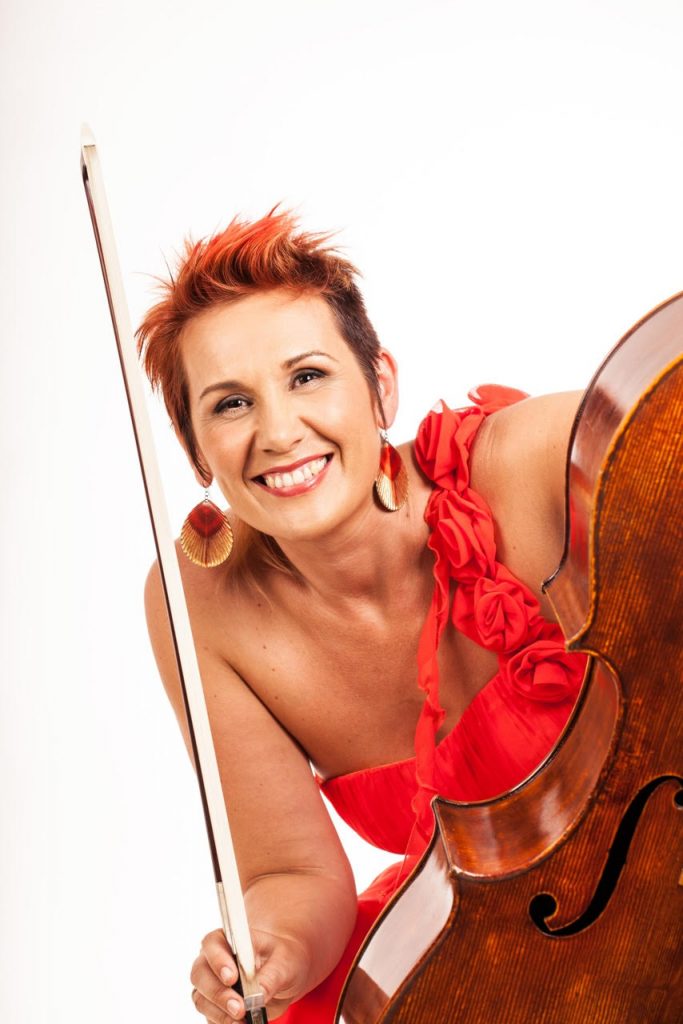
Orchestral instruments are used to bring favourite books to life in An Adventure at Grannies.

What do the children do each day in the Junior Primary environment? What is the curriculum?

Montessori International College follows the national curriculum, but it’s delivered in a Montessori way – with purpose and meaning.

In the Junior Primary School (Years 1 to 3), learning is centred on the unique needs of children between the ages of 6 and 9. Our teachers serve as guides for the children’s explorations as they acquire skills, pursue interests, and develop their unique potential. Ignited by the materials and lessons, these children use their imagination and reasoning minds to widely and deeply explore the universe. The Great Lessons offer inspiration and open doors to new areas of investigation.

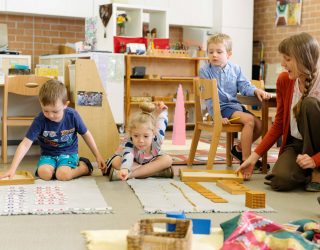
You walk into a room of our Junior Primary children and you stand in wonder as you observe the social dynamics of children working productively in a busy environment.  One child is quietly concentrating on the checkerboard to learn long multiplication, nearby two others are resolving a conflict at the peace table, while another small group is planning a ‘going out’ to the planetarium relating to their recent study of the solar system.  The variety of subject matter being explored is interconnected and feeds the individual needs of the child as a whole.

This is a normal day in a Montessori Junior Primary classroom.

The morning opens with each child using their personal diary to plan and organise their day.  They can choose to repeat a given presentation, request a new lesson or make new learning discoveries.  There is a continuous flow of children moving within and outside of the classroom. They are given the freedom to do yoga, garden or jump rope in the outdoor environment in order to develop deep concentration in their work.

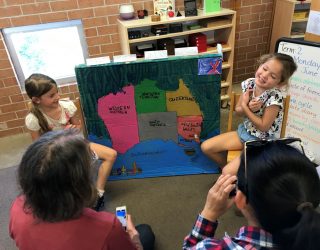
The drawing of a map of South America becomes a study of the continent; a child becomes interested in the customs and culture of Brazil and digs deeper until she discovers the Amazon forest and the nearly extinct Golden Lion Tamarin Monkey.  She is so excited she can’t wait to share her knowledge with her classmates and prepares a presentation on her discoveries.  In our classrooms children turn real-life experiences into ideas and concepts, so they can make sense of the world they live in. It’s hands-on learning.

Our children discuss, scrutinize, question, unearth, make friends, play, resolve conflicts, and grow.

It’s Education Reimagined.

Montessori International College follows the national curriculum, but it’s delivered in a Montessori way – with purpose and meaning.

In the Senior Primary School (Years 4 to 6), learning experiences lead children from a comprehension of the concrete to an understanding of the abstract. Learning spaces provide maximum opportunity for the children to learn from and with each other. Skill acquisition at this stage of development supports the child as they weigh options, examine contradictory evidence, tolerate differences of opinion, and make connections among different learning concepts and personal experience. These children are avid consumers of knowledge and deliberate critics of logic.

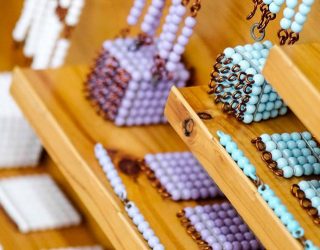
You walk into a room of our Senior Primary children and the first thing you notice is the dynamic learning space with open shelves, abundant with Montessori materials. This is not a silent space, rather, there is a hum of activity as children discuss and collaborate on their work. One child is quietly illustrating a finished project, nearby two others are working on the cubing of a three digit number using the wooden cubing material, which teaches them to analyse and question in a mathematical way, while another small group sits on the floor – working together to try and figure out how to organise their most recent fundraising event.

This is a normal day in a Montessori International College Senior Primary classroom.

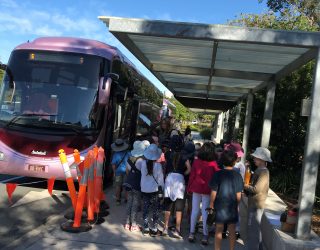
The morning opens with each student using their diary to plan their day. Following this, they organise themselves into group or individual work, depending on their preference. You will see mathematical materials being used, grammar materials laid out, small numbers of children huddled in the library where they pour over books for research, others venturing out for a guided bushwalk, and a child playing the ukulele on the deck while another writes lyrics.

A question about cyclones and local weather patterns becomes a focus of study on the impact of weather on the college campus. A flood marker is constructed out of wood, painted and dug into the ground at a nearby creek. Regular monitoring of rainfall and changing creek levels follows, and at the end of the term, a presentation of their findings is given to their peers. They are now more deeply connected with their local environment through this initial study of global weather patterns.

In our classrooms children turn real-life experiences into ideas and concepts, so they can make sense of the world they live in. It’s hands-on learning.

Our children discuss, scrutinize, question, unearth, make friends, play, resolve conflicts, and grow.

It’s Education Reimagined.

Yes. Montessori schools participate in NAPLAN to comply with regulatory requirements and children sit the tests as another classroom (practical life) activity. Most educators agree that the NAPLAN tests are a snapshot on a particular day rather than an assessment of the total development of the child. Montessori schools focus on the total development of the child – physical, social, emotional, intellectual and spiritual. The NAPLAN results only focus on numeracy and literacy and as such cannot provide a comprehensive measure of a school’s effectiveness.

Yes. Montessori schools participate in NAPLAN to comply with regulatory requirements and children sit the tests as another classroom (practical life) activity. Most educators agree that the NAPLAN tests are a snapshot on a particular day rather than an assessment of the total development of the child. Montessori schools focus on the total development of the child – physical, social, emotional, intellectual and spiritual. The NAPLAN results only focus on numeracy and literacy and as such cannot provide a comprehensive measure of a school’s effectiveness.

Register to attend our Open Day | 16 May 2026 | 10.00 am – 1.00 pm