2 April 2026
Contents

Dear MIC Families,
As we end our first Term of 2026 I wanted to delve into another Montessori approach with you. That of ‘Learning through Doing’.
Montessori learning through doing is an educational approach focusing on hands-on, experiential, and self-directed activity rather than passive listening.
Depending on their age/stage of development, children learn by physically interacting with their environment using specially designed materials, fostering independence, concentration, and practical life skills through “work”.
Key aspects of this approach include:
- Active Learning: Children explore and manipulate materials to turn abstract concepts into tangible understanding.
- Practical Life Skills: Activities like pouring, cleaning, and cooking help children develop coordination, focus, and independence.
- Prepared Environment: Classrooms are designed to allow free movement and choice, encouraging children to choose work that sparks their interest.
- Repetition and Mastery: Children often repeat tasks to refine skills, a key indicator of cognitive development and focus.
- Independence: Children are encouraged to do things for themselves, boosting self-confidence.
To explore more about Montessori’s perspective of “work”, and to dive into the differences between adult and child work, check out these two references for more information:Work (Montessori definition) and Work as a Developmental Principle (AMI 12-18 Montessori Diploma lecture notes).
Wishing you and your children a wonderful Easter break.
Warm regards,
Chris
Chris Peach – Principal

“Never help a child at a task at which he feels he can succeed” ~ Maria Montessori.
Our youngest children are most capable when provided with a prepared environment, a trained adult to connect them to the environment, the tools they need to be successful and the freedom to develop without interruption.
Children’s House recently hosted our first “working with your child breakfast” and this time it was the parents who were “learning by doing”. Children took great pride in sharing their classrooms, introducing parents to their friends, showing some of their favourite work and displaying a strong sense of belonging at MIC.
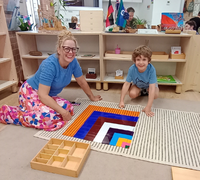
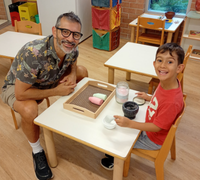
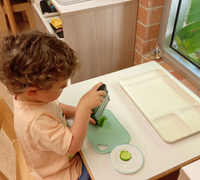

The Montessori Method has been designed for children to develop a sense of significance through responsibility and capability. A sense of belonging forms the basis of this significance, where children, at each stage of development, are encouraged to experience connection within a social group, their family, and the wider community.
The beginning of this year has already offered many opportunities for our Primary children and families, for belonging in action. Our Welcome Back BBQ brought families together in reconnection before the start of the school year, while last week’s Lion Dance gathered Children’s House and Primary with celebration and cultural appreciation in light of Chinese New Year. In Junior Primary, children commenced their Gymnastics and Swimming program, building confidence, coordination and cooperation. Senior Primary children have engaged in Surf Skills, encouraging teamwork and providing opportunities for social connection beyond the school environment.
Across all classrooms, community meetings and collaboration continue to ground children in our Montessori three-year cycle, where shared responsibility, contribution, cooperation, kindness and respect for themselves, one another and the environment, all nurture a deep and lasting sense of belonging.
“There is a great sense of community within the Montessori classroom where children of differing ages work together in an atmosphere of cooperation…there is a respect for the environment and for the individuals within it.” – Maria Montessori

As our first term comes to a close, we can reflect on a period rich with opportunities and experiences that embody the Montessori philosophy of learning by doing.
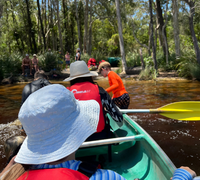
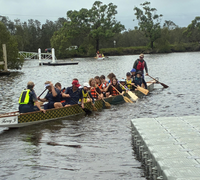
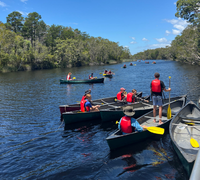
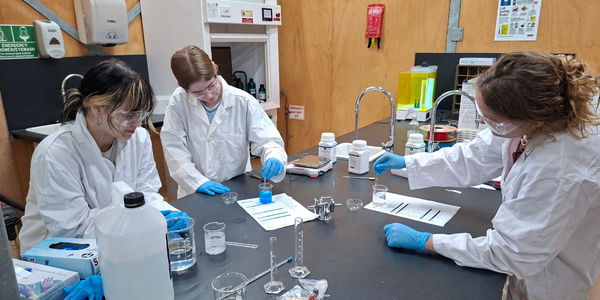
Throughout the term, our Land and Community students have fully immersed themselves in the theme of ‘The Wonderful Work of Water.’ The Adolescents enjoyed canoeing on the waters of the Noosa Everglades while on their Odyssey Trip. At the Maroochydore Surf Lifesaving Club, adolescents deepened their knowledge of Water Safety, gained first aid skills, and strengthened their respect for the ocean. The group took up Dragon Boating on the Maroochydore River, a physical activity centred on their Chinese studies. The science of water flowed through our studies as adolescents studied the water in our local waterways.
Our Local Integrated Project students took on management roles in each student-run business, handling planning, ordering, and financial decisions for their micro-economies. They also acted as role models and leaders for younger peers, fostering a sense of community and mentorship.
The Future Pathways students have broadened their knowledge and understanding of the Information Technology Industry by attending the ‘BiG Day In’. The experience gave students the chance to explore various career pathways, hear from keynote speakers who provided the latest information about IT, and be inspired to think about their futures in this industry.
The Montessori environment for adolescents is designed to emphasise learning by doing, choice, and collaboration. Through all these activities and experiences, our students continue to grow as independent, responsible, and engaged learners.

Behind every prepared environment is a team of people quietly doing important work. Much of what makes MIC feel calm, purposeful and supportive happens in small moments that families don’t always see day to day. Each newsletter we will share the story of one of our amazing team.
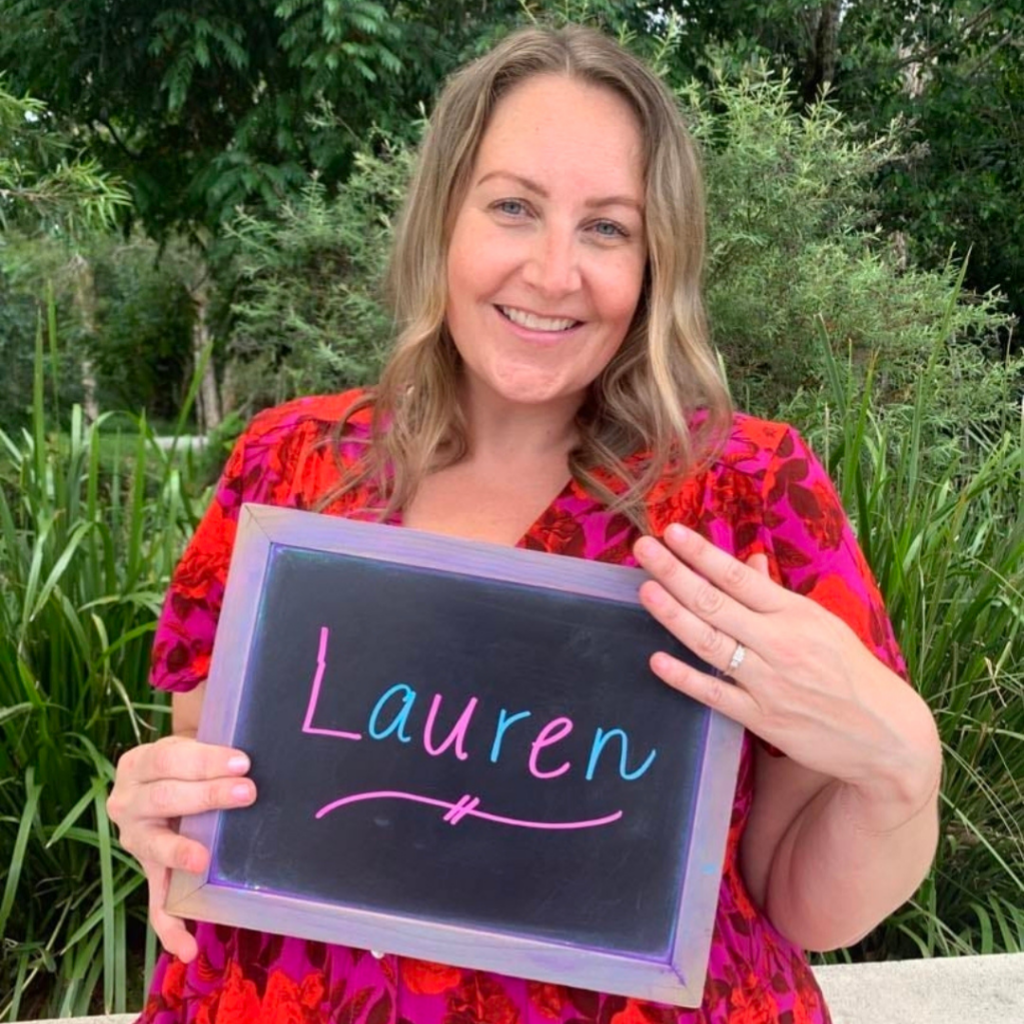
Lauren Paterson
Wandi Guide – Junior Primary
What drew you to Montessori, or to working with children and young people?
Being a teacher or working with children was something I was drawn to since I was very young. My mom taught the second grade for 30 years, and I always loved going into her classroom in the summer to help set-up or assist with marking papers at home. In highschool, I did work experience in a primary school, and then before starting University, I worked as a nanny and Kids Club coordinator at a ski resort in France.
To be honest, I was completely unfamiliar with Montessori education until my pre-service placement at MIC in 2011. I initially worked with Adolescents and just loved the freedom and responsibility they were given to follow their interests and creative passions while at school. I only taught in a mainstream school for a very short time, but immediately knew that the Montessori method was the path for me!
In one sentence, what do you most hope children gain from your learning community this year?…
READ HER FULL STORY HERE

Thank you for a great Term 1!
We are so grateful for our warm and connected community, participating in the events the Collective has organised this term.
Save the date for a few exciting events next term. The Pumpkin Party is a highlight of the year for our families and we can’t wait to create an experience for everyone to remember!
Pumpkin Party: 22 May, 3.30 pm – 5.30 pm
Family Movie Night: 5 June, 5.00 pm – 7.30 pm
End of Term Sausage Sizzle: 19 July
Wishing everyone a wonderful Easter break.
MIC Collective Committee

Human Tendencies
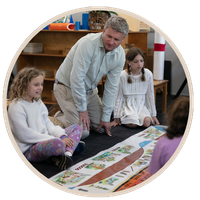
At MIC, we regularly share reflections on Montessori philosophy with our community in the spirit of collective knowledge and growth. These are our Montessori Moments which you will find in your School Stream app every couple of weeks.
In our latest Montessori Moment, we explore what Dr Maria Montessori described as Human Tendencies, the innate and universal drives that guide human development throughout life.
These natural tendencies, to explore, orient, order, imagine, work, communicate, perfect oneself, and more, are present from early childhood through to adulthood. They shape how we interact with our environment and with one another.
Understanding these tendencies helps us better support children at each developmental stage. For example, during the Primary years (6–12), the tendency to communicate and associate with others becomes particularly strong, which is why collaborative, group-based learning is so important at this age.
Montessori education continually invites us as educators to observe more closely, prepare more thoughtfully, and respond more respectfully to the developmental needs of the child.
Read the full article HERE.

 How to apply
 Make an enquiry